

Mount Kilimanjaro
Mount Kilimanjaro information
All Mount Kilimanjaro trekking and climbing tours
For good acclimatisation, try Mount Meru
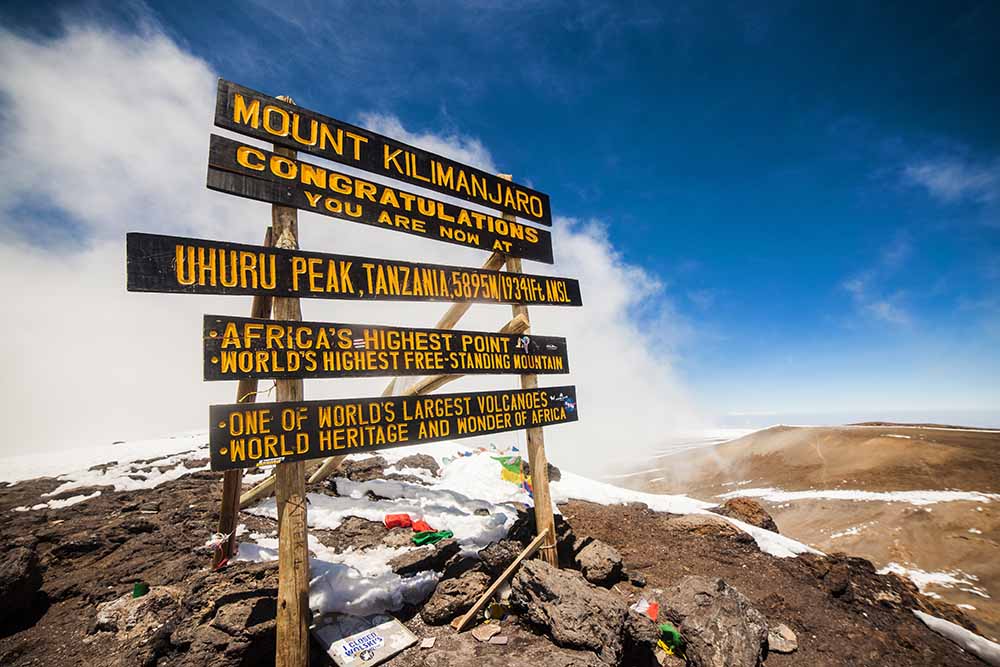
Kilimanjaro is located in Tanzania and is the highest mountain in Africa with a height of about 5,895 meters. It is the largest free-standing mountain in the world. It is often called the roof of Africa. It is also a mountain that is part of the so-called “crown of the world”. Kilimanjaro consists of three volcanoes Kibo (the highest), Mawezi and Shira. Kibo is still an active volcano, but it is estimated to have last erupted 360,000 years ago. The highest point is called Uhuru Peak. Uhuru means freedom in Swahili. As climbing experience is not required for the ascent, tens of thousands of tourists visit it every year. The national park in which Kilimanjaro is located has been a UNESCO World Heritage Site since 1973.
Climatic zones
Climbing Kilimanjaro is known for having many different vegetation zones:
| Above 5000m | Snow, glacier | Snow, ice | Low -25 °C |
| 4000-5000m | Alpine desert | Stone, lava, desert | 10 – 15 °C |
| 3000-4000m | Moorland | Grasslands, upland moors | 15 – 20 °C |
| 1800-3000m | Rainforest | Dense vegetation | 20 – 25 °C |
| Up to 1800m | Civilisation | Village, agriculture, livestock, farms | Up to 30 °C |
When to go
Climbing Kilimanjaro is possible at any time of the year. The peak season is from September to October, when most people go for the climb. The best times to climb Kilimanjaro is from December to mid-March and also in October, as these months have the highest average temperatures, the lowest chance of rain and mainly clear skies. Good conditions are also from mid-June to the end of October. From April to May, the risk of heavy rains is highest. Short rains are frequent in the second half of November and the beginning of December. However, the weather on Kilimanjaro is unpredictable and can change in a matter of minutes. It is common to experience rain during the dry season, but the weather can also be beautiful during the rainy season.
| MONTH | TEMPERATURE | PRECIPITATION | CLOUD COVER | CROWDS |
| January | Warm | Medium | Low | High |
| February | Warm | Medium | Low | High |
| March | Moderate | High | Medium | Low |
| April | Moderate | High | High | Low |
| May | Moderate | High | High | Low |
| June | Cold | Medium | Medium | Medium |
| July | Cold | Medium | Low | High |
| August | Cold | Low | Low | High |
| September | Moderate | Low | Low | High |
| October | Moderate | Low | Medium | Medium |
| November | Moderate | High | Medium | Low |
| December | Moderate | Medium | Medium | Medium |
GOOD
OK
NOT RECOMMENDED
There are six main routes that can be taken and they all have their advantages and disadvantages. Choosing a route depends on your mountain experience, what you would like to experience on the way, acclimatisation considerations and cost.
Our company regularly offers climbing tours on the Marangu, Lemosho and Machame routes throughout the year. You can request any other route but you must book the trip in advance and the minimum number of people for the other routes is two. We are also able to offer itineraries that include Crater Camp if you choose to do it.
Children are welcome however must be aged 8 or over.
Lemosho Route
This journey starts on the western part of Kilimanjaro. This route is thought of the one that has the most beautiful scenery. Usually this journey takes seven or eight days. At the start, this route avoids the crowds before connecting with the Machame route. This route is popular not only because of the landscape, but also because it has the best acclimatisation conditions for the ascent, thanks to which there is a good chance of avoiding acute mountain sickness.
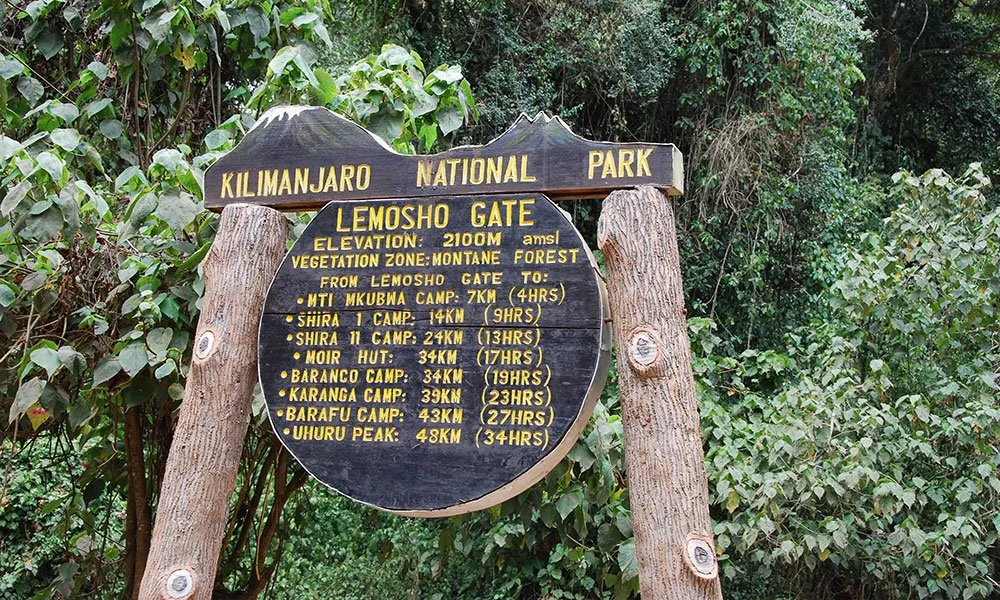
Distance: 67 km
10 day tour: US$ 3,000
9 day tour: US$ 2,690
Machame Route
The Machame Route is one of the most scenic routes to the top of Kilimanjaro. Although the climb is more difficult, it has a much higher success rate than the Marangu route.
Six-day and seven-day itinerary options are available, with the preferred option being the seven day route, which provides you with an extra day of acclimatization. The route has several steep sections and includes numerous climbs and descents – including the Barranco Wall!
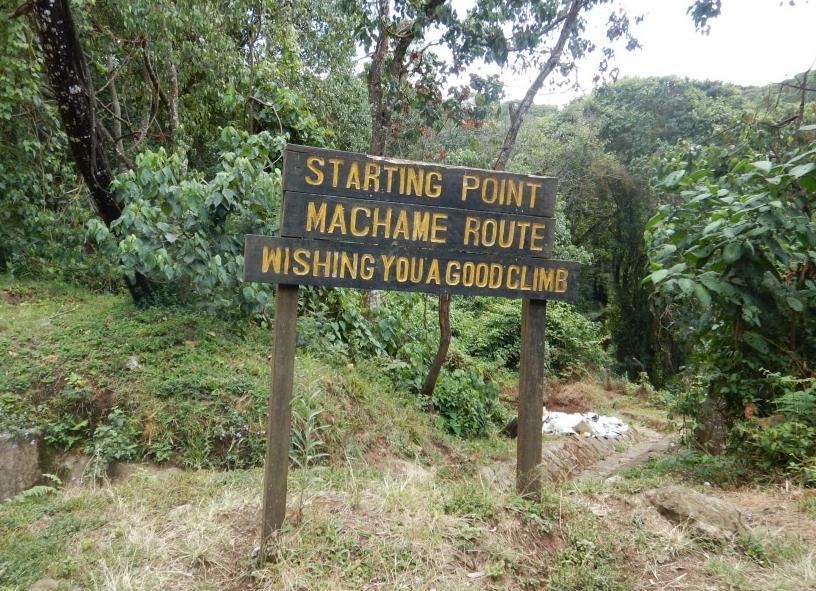
Distance: 61 km
9 day tour: US$ 2,500
8 day tour: US$ 2,360
Marangu Route
The Marangu Route is known as the ‘tourist route’ or the ‘Coca Cola Route’. It is one of the easiest routes up the mountain. It isn’t very steep until the day of the ascent, when you go up a steep slope.
The Marangu route is also the only one that has the same ascent and descent route. As well as this, it is a route on which you do not camp in tents, but sleep in cabins. If you don’t like sleeping in a tent, then this is the right route for you.
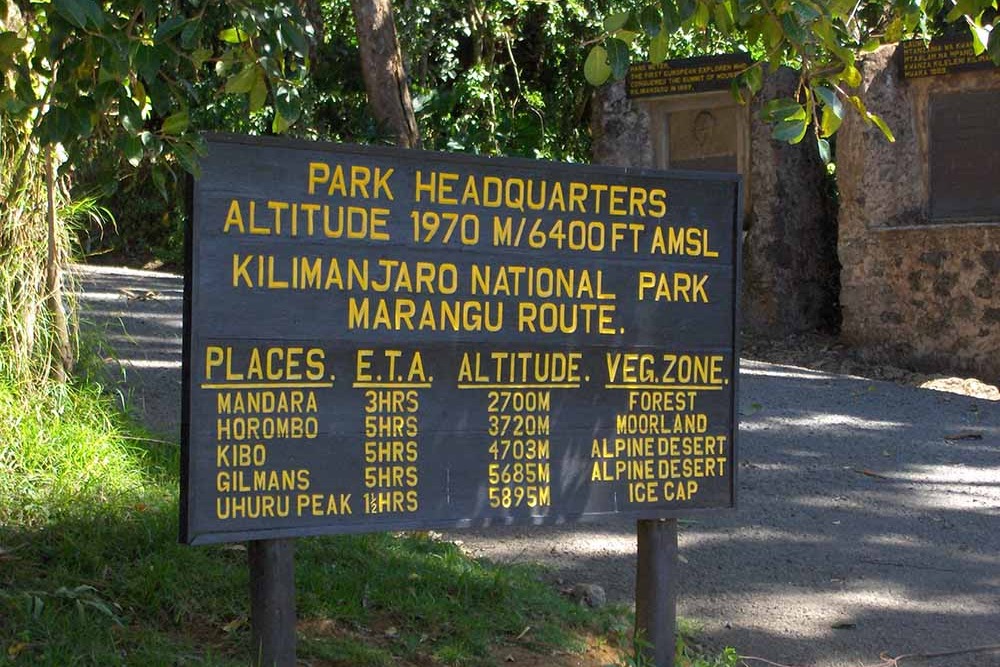
Distance: 70 km
8 day tour: US$ 2,240
7 day tour: US$ 2,190
Northern Circuit
This is the longest route to the summit of Kilimanjaro with one of the highest success rates. The trek lasts either eight or nine days, with plenty of opportunities to climb to higher altitudes and sleep at lower altitudes, which is great for acclimatisation. This trail starts west of the mountain and follows the Lemosho route for the first two days. The route then turns north near the Lava Tower and takes the northern route around the summit.
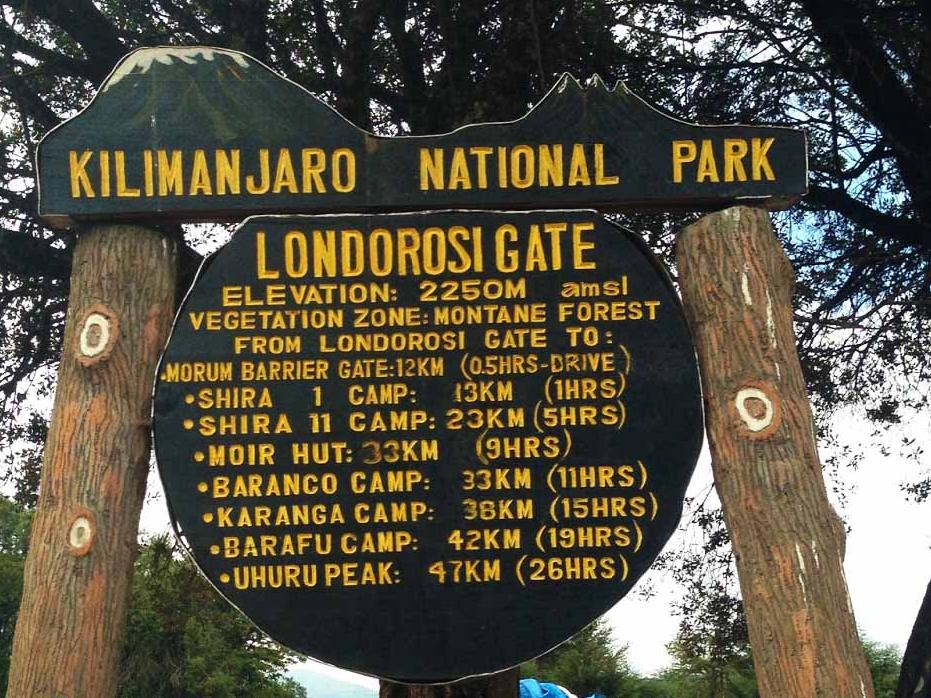
Distance: 88 km
11 day tour: US$ 3,440
10 day tour: US$ 3,250
Rongai Route
The Rongai Route is the only route starting from the north side. This route is much drier than the southern slopes and is therefore preferred during the rainy season. The landscape is less scenic than the other routes.
The hike has a steady, gradual climb at the beginning and the campsites are well spaced apart. The route is usually seven days long, with a high success rate of reaching the summit of Uhuru.
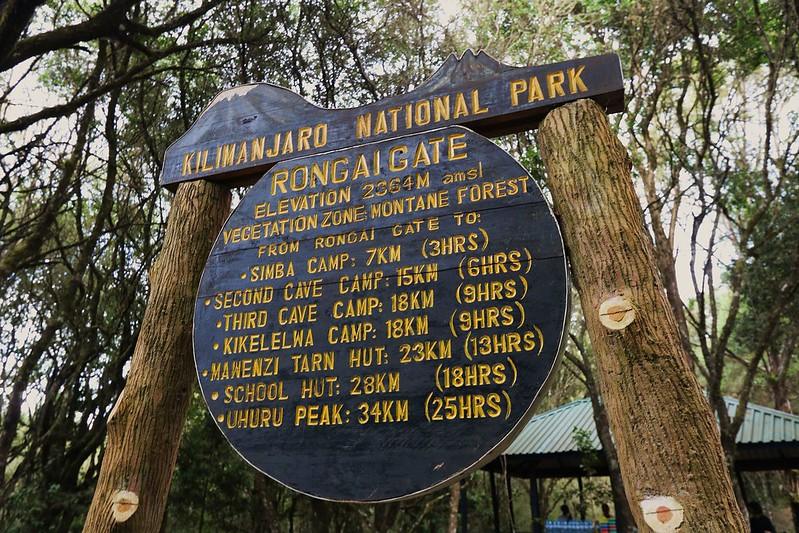
Distance: 74 km
8 day tour: US$ 2,350
Umbwe Route
Umbwe route is one of the shortest routes to the summit of Kilimanjaro, but it’s also the hardest and most challenging. This is the route to choose if you want to test yourself on the slopes of Mount Kilimanjaro, away from the crowds that are found on the more popular trails. It will test the fitness and stamina of hikers and therefore it is best for experienced mountain trekkers who are looking for a challenge.
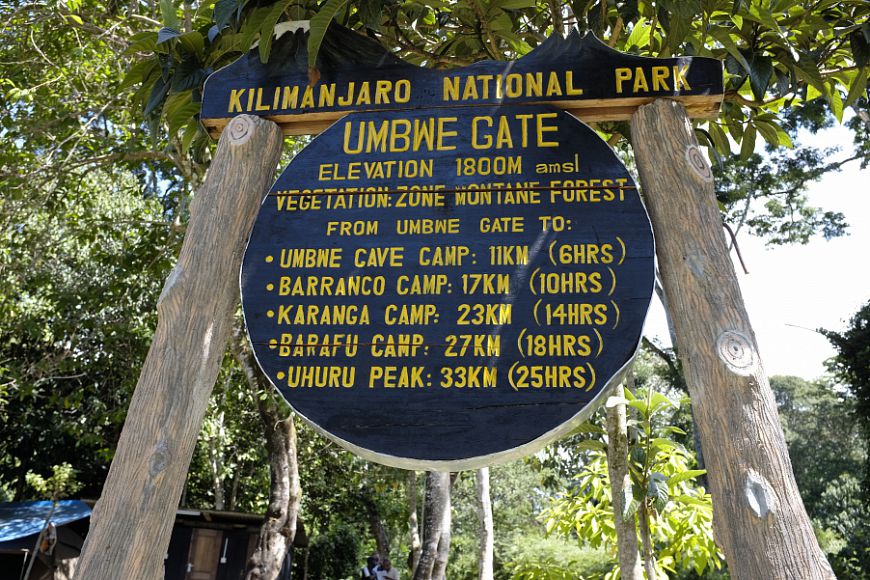
Distance: 48.5 km
8 day tour: US$ 2,440
Kilimanjaro porters and guides are the people who make your dream of getting to the top of Mt Kilimanjaro come true.
They will carry all your gear to the top. This means tents, tables, chairs, cooking utensils, gas bottles and often toilets.
Before you begin your climb you will meet your guide and porters. Typically guides can speak good English, porters a little or not at all.
Porters carry all your gear (excluding your daypack) and all the equipment you need on your climb (tents, cooking equipment, food, water etc.). Each porter carries up to 20kg on their back or head.
Porters always go ahead of you and your guide to make sure they get to each Kilimanjaro campsite before you and have everything setup for your arrival (tent assembled, food ready etc.).
Guides are responsible for managing the porter team and ensuring you have a safe and enjoyable hike. Guides are fully trained in mountain first aid, and have many Kilimanjaro summits under their belt.
The average ratio of support staff is 3 porters for every climber, 2 guides for every 4 climbers, and the cook and assistant guides vary depending on numbers:
| Clients | 1 | 2 | 3 | 4 | 5 | 6 | 7 | 8 | 9 | 10 |
| Guide | 1 | 1 | 1 | 1 | 1 | 1 | 1 | 1 | 1 | 1 |
| Assistant Guide | 0 | 1 | 1 | 1 | 2 | 2 | 2 | 3 | 3 | 3 |
| Cook | 1 | 1 | 1 | 1 | 1 | 1 | 1 | 1 | 1 | 1 |
| Porter | 5 | 7 | 10 | 13 | 16 | 19 | 22 | 25 | 28 | 31 |
| TOTAL CREW | 8 | 12 | 16 | 20 | 25 | 29 | 33 | 38 | 42 | 46 |
Tipping on Mt Kilimanjaro is not compulsory, but is expected for all of the hard work from the crew to make your trip nice and enjoyable.
Below is an example of how much you might want to tip based on the group size. Tipping amounts are per group, not per climber:
For an 8 day Lemosho route trek the total tipping value per group and climber would look as follows in USD ($):
| No. CLIENTS | 1 | 2 | 3 | 4 | 5 | 6 | 7 | 8 | 9 | 10 |
| TOTAL TIP | 720 | 1,040 | 1,280 | 1,520 | 1,920 | 2,160 | 2,400 | 2,800 | 3,040 | 3,280 |
| TIP PER CLIENT | 720 | 520 | 427 | 380 | 384 | 360 | 343 | 350 | 338 | 328 |
| No. clients | Total tip | Tip /client |
| 1 | 720 | 720 |
| 2 | 1040 | 520 |
| 3 | 1280 | 427 |
| 4 | 1520 | 380 |
| 5 | 1920 | 384 |
| 6 | 2160 | 360 |
| 7 | 2400 | 343 |
| 8 | 2800 | 350 |
| 9 | 3040 | 338 |
| 10 | 3280 | 328 |
Tips are usually paid on the last day in the morning when all of the staff will sing and dance for you. After this ceremony you can pay your tips to your guide or individually to each person.
Review our checklist of equipment and clothing you should pack
Luggage
- Waterproof duffle bag: to carry your main gear we recommend using a 90-100 L duffle bag. Max weight is 15 Kg.
- Daypack: to carry your own daypack. Volume 30-40L is sufficient.
- Cover: waterproof cover or (and) dry bags.
Sleeping
- Sleeping bag: 4-season or -20 ºC sleeping bag and compression sack.
- Sleeping bag liner: things could be dirty so we recommend liner to keep the sleeping bag clean. The Liner also provides extra warmth.
- Sleeping mat: a sleeping mat will be provided, but if you’ll prefer an extra mat or a different one, you can take yours.
Head
- Sun hat: preferably wide-brimmed for extra sun protection.
- Warm hat: any hat to cover the ears.
- Buff or bandana: it is very dusty while you descend. Use a buff or bandana to protect you from breathing dust is good idea. Also provide extra warmth while it is cold.
- Sunglasses: choose a pair of high UV protection glasses cat 3-4.
- Headtorch: a good headtorch is needed during the night, and especially when walking during darkness.
Footwear
- Hiking boots: mid-weight hiking boots with ankle support. Well broken in to prevent blisters.
- Gaitors: high heel gaiters, mostly to prevent dirt and derbis getting into the boots.
- Socks: 3-4 pairs of hiking socks and a pair of liner socks for extra warmth and blister protection.
- Thick socks: warm socks for the summit at night.
Hands
- Lightweight gloves: some gloves for daily use. Merino or fleece gloves.
- Mittens: it gets really cold during the night at the summit. Heavy mittens should be able to go over your liner gloves. A safety strap is advised.
- Trekking poles: trekking poles can reduce the impact on your joints by up to 20%.
Upper body
- Thermal base layer: Merino wool is the best base layer.
- T-shirt: fast drying, moisture wicking.
- Long sleeved shirt: fast drying, moisture wicking, when is too sunny or breezy it’s a good idea to wear long sleeved shirt.
- Fleece: one lightweight and one warm polartec fleece.
- Hardshell jacket: waterproof and windproof jacket. Goretex is the best but poncho will also be good.
- Insulated jacket: a synthetic or down jacket for the summit push.
Legs
- Thermal base layer: Merino wool is the best base layer.
- Hiking trousers: hiking trousers for every day hiking, fast drying and weather resistant.
- Hardshell trousers: waterproof and windproof trousers or over-trousers. Goretex material is the best.
General accessories
- Sun cream and lip balm: high UV protection SPF+50.
- Toothbrush and toothpaste: just small tube of toothpaste is sufficient.
- Wet wipes: it’s a really good idea to take antibacterial wet wipes to maintain good hand hygiene.
- Ear plugs: it could be noisy in camp, so ear plugs are recommended.
- Personal snacks: you’ll get sufficient meals, but you can take your favourite snacks just in case.
- Camera: the best way to keep your memories alive. You can take pictures on the phone or Gopro, it’s your choice.
- Spare batteries: don’t forget spare batteries for your camera, and also for your head torch.
- Powerbank or solar charger: be sure to bring one to recharge your phone.
- First aid kit and personal medication: Imodium or any medication for diarrhoea, and also painkillers, blister plasters and plasters. Any other medication prescribed by your G.P.
- Water bottles: capacity to carry at least 2 litres of water. A neoprene cover is advisable to help insulate the bottle at higher elevations. Water bladder is good, but you’ll need a thermos or insulated bottle for summit nights. Water bladder will definitely freeze.
- Luggage padlock: to lock your luggage and duffel.
Mountain equipment rental
Prices in US$
Scarf $5 /trip
Sleeping bag $30 /trip
Socks $5 /trip
Summit pants (Ski pants) $15 /trip
Sun hat $10 /trip
Sunglasses $20 /trip
Thermal rest style mat $10 /trip
Thermal top $10 /trip
Thermal T-shirt $10 /trip
Thermal underwear $10 /trip
Walking poles (pair) $10 /trip
Walking T-shirt $10 /trip
Walking trousers $10 /trip
Warm hat $5 /trip
Water bottle 1 litre $5 /trip
Waterproof jacket $15 /trip
Waterproof trousers (windbreak) $15 /trip
Balaclava $5 /trip
Bandana $5 /trip
Binoculars $25 /trip
Camelback water bag $15 /trip
Crampons $25 /trip
Day pack cover $5 /trip
Down jacket $20 /trip
Duffel bag (waterproof 85 litre) $20 /trip
Fleece $5 /trip
Fleece jacket $10 /trip
Fleece trousers $10 /trip
Gaiters $10 /trip
Gloves $5 /trip
Glove liners $5 /trip
Head torch $15 /trip
Hiking boots $25 /trip
Neck warmer $5 /trip
Pillow $5 /trip
Poncho $15 /trip
Rucksack 70 litre $30 /trip